Best Smart Ring for Hiking and Altitude UK 2026
Which smart ring suits hiking and altitude - battery for multi-day trips, SpO2 trends as you climb, and cold-weather reliability, with honest trade-offs.

A smart ring is not a navigation device, and it will never replace a GPS watch on the hill. What it does well on a hike is the quiet stuff: tracking how your body copes with the climb, how badly altitude wrecks your sleep, and whether you have recovered enough to push on the next day. The catch is that the features that matter at altitude - battery endurance, SpO2 sensing, cold-weather reliability - are exactly where rings differ most.
What does 'best for hiking' actually measure?
Four things separate a good hiking ring from an average one, and they are different from the priorities that win our best smart rings roundup overall.
- Battery endurance. On a multi-day trek you may not see a plug socket for days. A ring that lasts 10-12 days changes whether you can track the whole trip.
- SpO2 sensing. SpO2 (the percentage of your haemoglobin that is carrying oxygen) drops as you gain altitude, so a ring that logs an overnight trend gives useful context on how you are acclimatising.
- Cold-weather reliability. Optical sensors read worse from cold, poorly perfused fingers - a real factor on an exposed ridge.
- Durability and fit. A titanium ring shrugs off scrambling far better than a watch screen, but finger swelling at altitude can change how it sits.
No ring wins on all four, so the right pick depends on which part of the hiking problem you most need solved.
Which ring lasts longest on a multi-day hike?
Battery is where rings beat smartwatches outright, and it is the single most important spec for backcountry use. Manufacturer-claimed figures for typical use:
- RingConn Gen 3: the endurance champion at roughly 10-12 days, charged from a magnetic puck you can run off a USB-C power bank. For an off-grid trek this is the standout.
- Ultrahuman Ring Pro: around 6 days, and subscription-free, so there is no app paywall waiting when you get home.
- Samsung Galaxy Ring: 6-7 days from the ring, but its charging case holds several extra charges - effectively a power bank for your finger, which suits trips where you carry the case anyway.
- Oura Ring 5: 4-5 days, the weakest here, and the reason Oura is a better pick for day-hiking than for a week in the hills.
Real-world drain runs 20-40% below these numbers once continuous heart-rate and SpO2 logging are on - exactly the features you want active at altitude. See our smart ring battery life comparison for the full breakdown.
Can a smart ring track SpO2 at altitude?
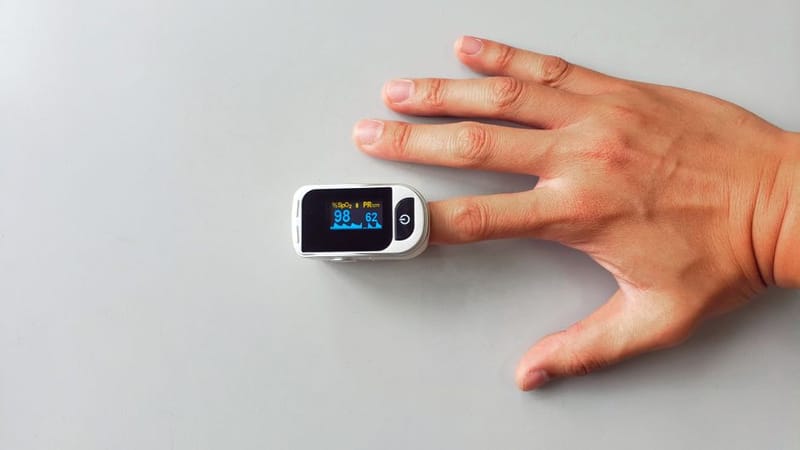
Yes, with honest limits. Most flagship rings - Oura, Samsung, Ultrahuman and RingConn - measure blood oxygen overnight using pulse oximetry, the same optical method as a clip-on clinic oximeter. As you ascend, the thinner air lowers the oxygen in your blood, and a ring will usually show that overnight average drifting down over successive nights at a new elevation.
That trend is genuinely useful for watching how you acclimatise, but it is not a medical reading. A clinical oximeter is validated to within about two percentage points of arterial oxygen; consumer rings are not cleared to that standard, and movement, fit and cold fingers all widen the error. Crucially, a normal SpO2 number does not rule out acute mountain sickness (AMS, the headache-and-nausea illness of rapid ascent), which is diagnosed on symptoms, not a sensor. If you feel unwell, descend - do not wait for the ring to agree. The NHS guidance on altitude sickness is the right reference, not your wellness app.
Does cold weather affect smart ring readings?
It does, and hikers feel it more than most. When your hands are cold the blood vessels in your fingers constrict, which means less blood for the optical sensor to read. That degrades heart-rate accuracy, makes SpO2 spot-checks unreliable, and can cause dropped readings until your hands warm up. The fix is simple: take the measurement once you are inside the tent or hut with warm hands, and trust the overnight numbers (taken while you sleep warm in a bag) far more than a cold daytime spot-check.
Battery chemistry also slows in the cold, so expect endurance to fall in sub-zero conditions. Keeping the ring on your finger rather than in a pack pocket helps, because body heat keeps the cell working. None of this makes rings useless in winter - it just means the overnight, in-the-bag data is the signal worth trusting.
Which smart ring should you pick for hiking?
Short version, by trip type:
You are doing multi-day, off-grid treks - RingConn Gen 3. The 10-12 day battery and power-bank-friendly puck mean you can log the whole expedition without hunting for a socket, and it still does overnight SpO2.
You want the best acclimatisation insight on shorter trips - Oura Ring 5. The most refined sleep and recovery algorithms make the most of the SpO2 and HRV (heart-rate variability) trends, as long as you can charge every few days.
You refuse to pay a subscription - Ultrahuman Ring Pro. Strong recovery tracking, six-day battery, and no monthly fee, covered in our no-subscription guide.
You already live in Samsung Health - Samsung Galaxy Ring. The charging case is a quiet advantage when you are carrying it on a trip anyway.
RingConn Gen 3
Oura Ring 5
Frequently asked questions
Can a smart ring warn me about altitude sickness?
Which smart ring has the best battery for a multi-day trek?
Are smart ring SpO2 readings accurate at altitude?
Will cold weather damage a smart ring?
Is a smart ring a substitute for a GPS hiking watch?

Best Smart Ring for Athletes
Smart Ring Battery Life Comparison UK 2026
Smart Ring Blood Oxygen (SpO2) Accuracy Explained
Smart Ring Without a Subscription