Can a Smart Ring Track Hydration?
No smart ring directly measures hydration - none has a sensor for it. Here's what a ring can and can't tell you about dehydration, and what to use.
Can a smart ring measure hydration?
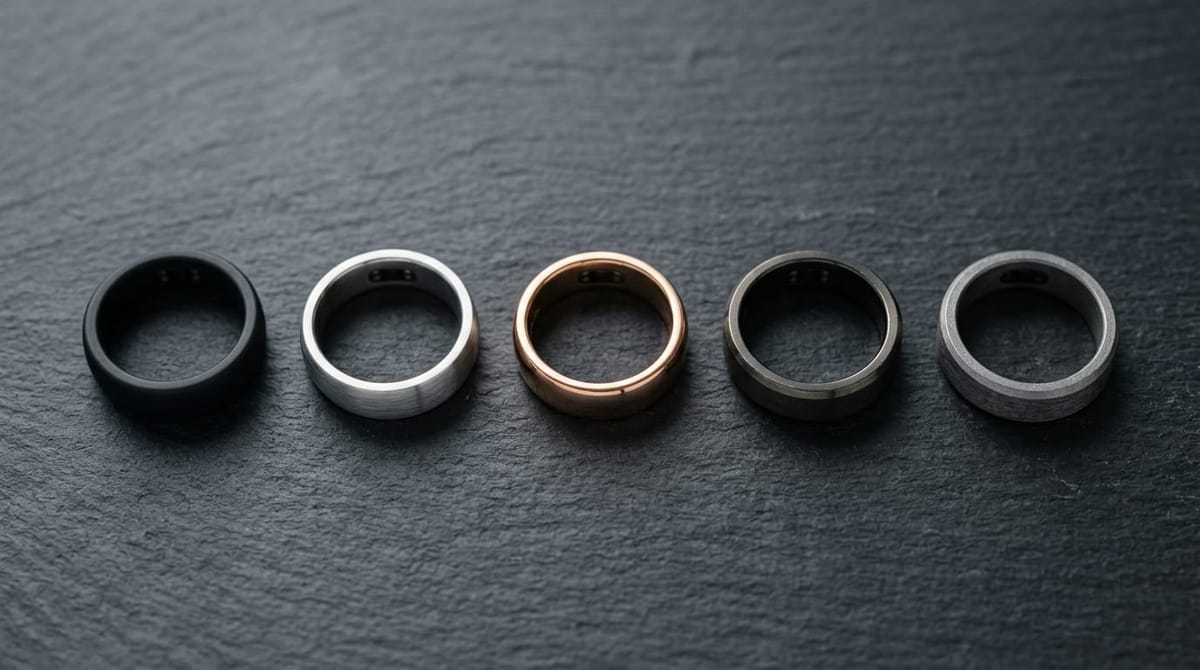
Not directly, and it is worth being clear about that before you buy. Despite the marketing language around wellness wearables, no mainstream smart ring - Oura, Samsung, Ultrahuman or RingConn - contains a sensor that measures your hydration level. If you have seen a ring described as tracking hydration, it is either logging what you type in or inferring something loosely from other signals.
This matters because hydration is one of the health metrics people most often assume a ring covers. It does not, in the way a heart-rate or temperature reading does.
Why can't smart rings measure hydration directly?
The sensors are the limitation. A smart ring reads your pulse and blood-oxygen with an optical technique that shines light into the skin, and it reads temperature with a thermometer against your finger. Neither of those can quantify the water content of your body.
Technologies that get closer to real hydration measurement, such as bioimpedance (passing a tiny electrical current through tissue) or sweat-composition sensors, exist in research and in a few specialist devices, but they are not built into consumer rings. Fitting a reliable hydration sensor into a band a few millimetres thick remains an unsolved engineering problem.
What can a smart ring tell you about dehydration?
Indirectly, quite a bit - but only once dehydration is significant. When you are meaningfully dehydrated, your blood volume drops and your heart works harder, so your resting heart rate tends to rise and your heart-rate variability can fall. Body temperature can edge up too, and sleep quality often suffers. These are documented effects of dehydration on the body.
A ring picks up those knock-on changes. So an unexplained jump in your resting heart rate after a hot day or a heavy workout might, among other causes, point to being under-hydrated. It is a weak, non-specific hint rather than a hydration measurement.
Can you log water intake on a smart ring app?
Often, yes - but that is logging, not sensing. Several ring apps, and plenty of third-party apps you can pair alongside, let you tap in each glass of water so you can see your intake against a daily goal. It is a useful habit tool, and pairing the reminder with your ring's other data in one app is convenient.
Just keep the distinction clear: the number reflects what you told the app you drank, not what your body actually holds. If you forget to log a drink, the app has no way to know.
How should you actually track hydration?
The reliable signals are old-fashioned and free. Thirst is a reasonable everyday guide, and urine colour is the classic at-home check: pale straw suggests good hydration, dark yellow suggests you need more fluid. For most people, drinking to thirst and glancing at that is more accurate than any wearable estimate.
Use your ring as a backstop rather than a primary tool. If its resting heart rate or temperature trends look off during hot weather or hard training, hydration is one thing worth ruling out. For what those readings mean, see our temperature accuracy guide, and our best smart rings guide covers which models track the underlying metrics best.