Do Smart Rings Scratch Easily? (Durability Guide)
Titanium smart rings resist knocks but still pick up fine scratches over time. Here's why it happens, what makes it worse, and how to protect yours.
What are smart rings actually made of?
Nearly every mainstream smart ring - the Oura Ring, the Ultrahuman Ring Air, the Samsung Galaxy Ring and the RingConn - is built around an outer shell of titanium (a lightweight, corrosion-resistant metal prized in jewellery and aerospace). Titanium is chosen because it is strong for its weight, skin-friendly and does not tarnish.
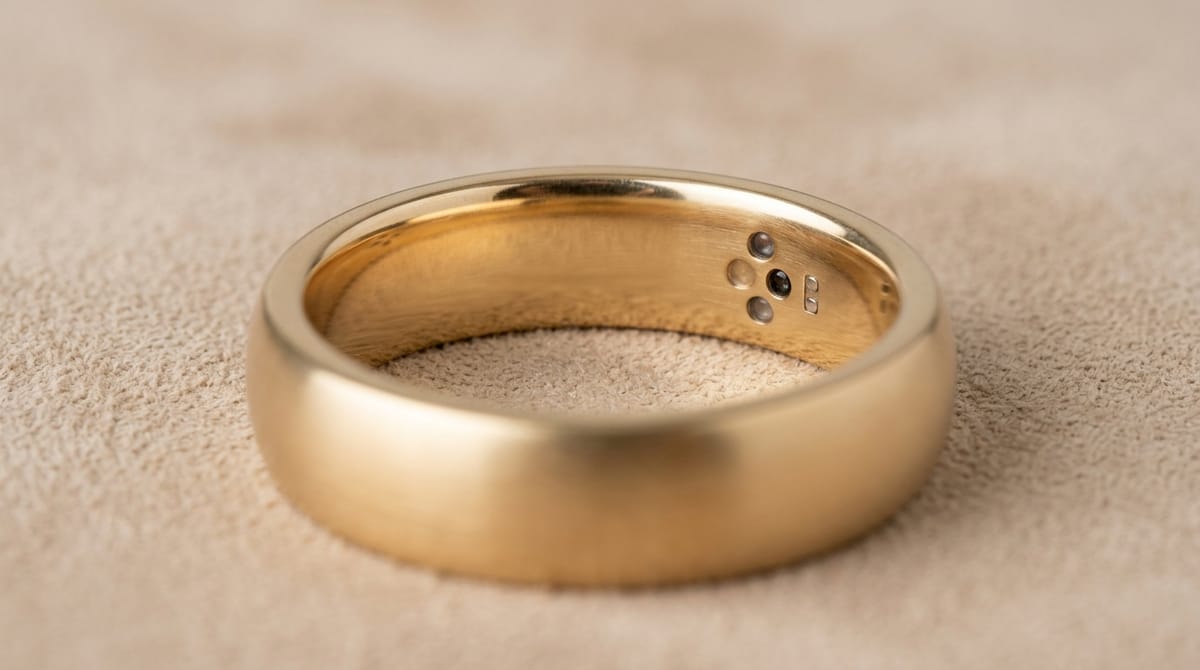
The part that touches your finger is different. Inside the metal band sits a moulded core of medical-grade epoxy resin that houses the sensors and holds the electronics away from your skin. That inner surface is smooth and non-metallic, which is why wearers generally find smart rings comfortable and why people with metal sensitivities often tolerate them well. The scratch question, though, is almost entirely about the titanium on the outside.
Why do titanium smart rings still scratch?
Titanium sounds indestructible, but hardness and strength are not the same thing. On the Mohs scale (a 1 to 10 ranking of scratch hardness), titanium sits around 6. That makes it far tougher than gold or aluminium, yet still softer than several things your hand meets every day.
The most common culprit is ordinary grit. Sand, concrete dust and many types of stone contain quartz, which rates about 7 on the Mohs scale of mineral hardness - harder than titanium. Rub a sandy hand along a wall or grip a chalky climbing hold and microscopic quartz particles act like fine sandpaper. Over months of wear, that produces the faint hairline marks most long-term owners eventually notice. It is not a defect; it is physics.
Do coloured finishes scratch more than silver?
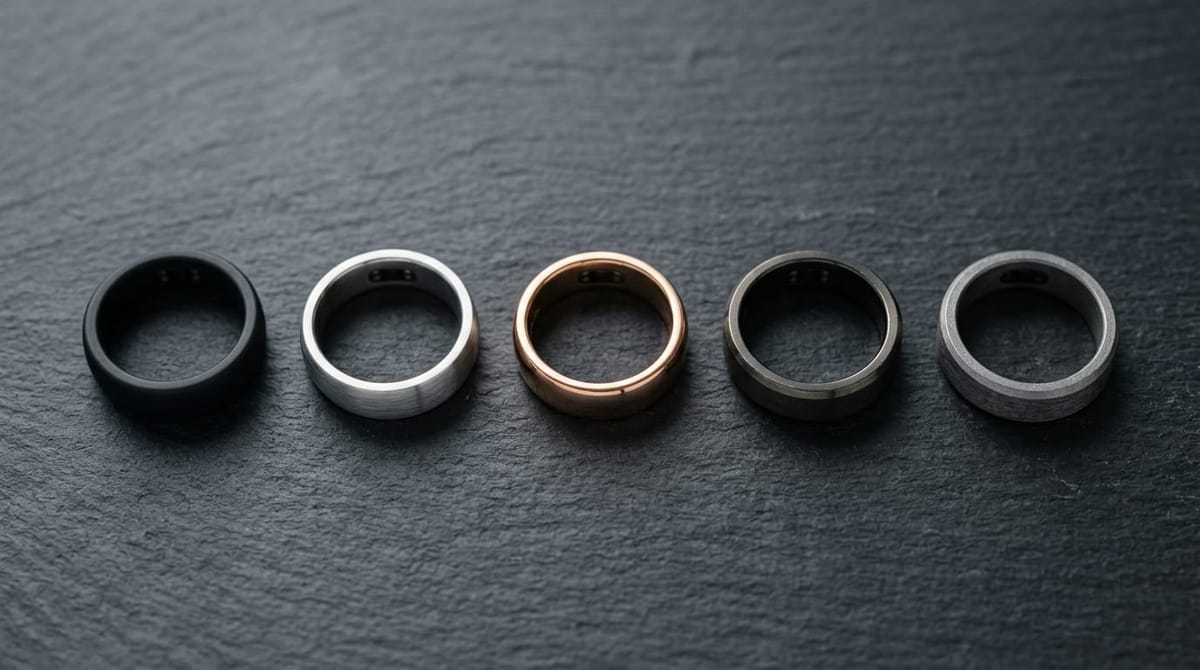
Yes, in appearance at least. Natural silver and matte-grey titanium show the least, because a scratch exposes more titanium underneath - the same colour - so marks blend in. Black, gold and rose-gold rings are different. Those colours come from a PVD coating (physical vapour deposition, a thin decorative surface layer bonded to the metal). The coating itself is reasonably hard, but once a scratch cuts through it, the lighter titanium beneath shows as a bright line against the dark finish.
This is why heavy black or gold rings can look more worn than a silver ring that has taken exactly the same knocks. If you want a finish that ages gracefully and hides scuffs, natural or brushed silver titanium is the safest choice.
What everyday activities cause the most damage?
Weightlifting and the gym. Gripping knurled barbells and dumbbells drags the ring across hard, textured steel - the single fastest way to scratch any ring. Wear it on the non-lifting hand or take it off.
Rock climbing and bouldering. Gritstone and granite holds are packed with quartz and will mark titanium quickly.
DIY, gardening and manual work. Bricks, concrete, tools and soil all carry grit harder than the ring shell.
Beach and watersports. Wet sand is essentially fine quartz abrasive - a day at the coast can add several tiny scratches.
Everyday grip. Nothing dramatic, just months of holding railings, phones in gritty pockets and steering wheels, which is why marks appear even on careful owners.
Do scratches affect tracking accuracy?
No. The heart-rate, temperature and blood-oxygen sensors sit on the inner face of the ring, pressed against your finger, where grit cannot reach them. Cosmetic scratches on the outer titanium have no effect on the optical sensors or the readings they produce.
The one thing worth protecting is the inner sensor bumps themselves - avoid dropping the ring onto hard tile lens-side down, and never use abrasive cleaners. For routine cleaning, mild soap and water is enough; see our guide to cleaning a smart ring for the full method.
How do I stop my smart ring from scratching?
Take it off for heavy grip tasks
Weightlifting, climbing, heavy DIY and gardening are the big four. Two minutes of removal saves months of wear.
Choose a natural or silver finish
If you are still buying, a brushed silver titanium ring hides scuffs far better than black or gold PVD.
Keep it off gritty surfaces
Don't rest it on concrete, sand or a workbench. Use a small dish or the charger dock at home.
Clean gently
Warm water and a soft cloth only. Never use toothpaste, polish or abrasive pads, which add their own fine scratches.
Accept a little patina
Titanium develops a soft, even sheen of micro-scratches over time. On a silver ring this looks like character rather than damage.
Which smart rings are the most scratch-resistant?
Scratch resistance depends more on finish than on brand. Across the market, a natural or matte silver titanium ring will always outlast a coated one cosmetically, because there is no contrasting coating to wear through. Some newer models add a harder protective layer such as DLC (diamond-like carbon, an ultra-hard coating used on tools and watches) to their darker finishes, which resists marks better than standard PVD - worth checking the spec sheet if a black ring is a must.
If day-to-day toughness is your priority, weigh it alongside water resistance and battery life in our best smart rings guide, and if skin comfort matters too, our guide to smart ring materials and allergies covers what sits against your finger.