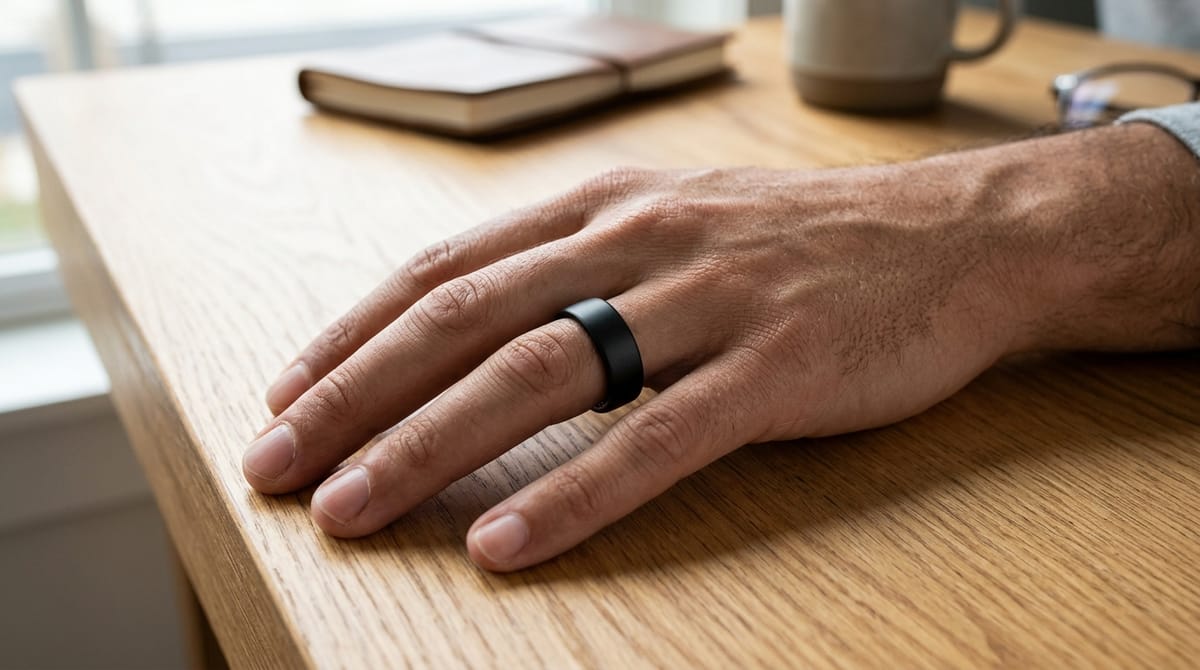
Can You Wear a Smart Ring Through Airport Security?
Can you wear a smart ring through airport security? Yes - what to expect at scanners, the rules for the charging case, and tips for flying with one.

A smart ring is one of the easiest gadgets to travel with - it is tiny, it never needs taking off in the security line, and it keeps tracking your sleep and heart rate through long-haul flights when a watch would feel bulky. There are only two things worth knowing before you fly: how the ring behaves at security, and where to pack its charger.
This guide covers both, plus the small practical points that come up when you take a ring abroad. None of it is complicated, but a couple of details - especially around the lithium battery in the charging case - are worth getting right so you are not caught out at the gate.
Can you wear a smart ring through airport security?
In almost all cases, yes, and you can keep it on. Smart rings are made from titanium or similar light metals, but the amount of metal is tiny - far less than a watch, a belt buckle, or even some chunky fashion rings. Walk-through metal detectors are calibrated for larger objects and a ring on your finger rarely sets one off.
Modern airports increasingly use millimetre-wave body scanners rather than metal detectors. These look for shapes and density anomalies, and a flat ring sitting flush against your finger does not register as a concern. You do not need to declare it, remove it, or place it in a tray. In the rare event a scanner flags your hand, security may ask you to remove the ring for a quick swab or re-scan - it takes seconds. For the official rules on what you can carry, the UK government's hand luggage restrictions guidance is the authoritative reference.
Can you take the charging case on a plane?
Yes, but it belongs in your carry-on, not your checked luggage. Most smart-ring chargers are either a small dock or a charging case with a built-in lithium battery (a portable power source for the ring, like a miniature power bank). Airline and international aviation rules require lithium batteries and power banks to travel in the cabin, where a fault can be spotted and dealt with, rather than in the hold.
The battery in a ring charging case is very small - well within the limits airlines set for personal devices - so there is no paperwork or special permission needed. Just keep it in your hand luggage. The same applies to any USB charging cable, which can go in either bag but is simplest kept with the case. When in doubt, your airline's website lists its exact battery policy.
Should you wear your ring during the flight?
This is where a ring earns its place. On a long-haul flight it quietly tracks your sleep, heart rate and movement without the bulk of a watch pressing into the armrest. The data is genuinely useful afterwards for understanding how the journey affected you and planning your recovery.
One small thing to watch: fingers can swell slightly on long flights and at altitude, so a ring that fits perfectly on the ground may feel tight after several hours. It is rarely a problem, but if you know your fingers swell, a ring with a marginally relaxed fit is more comfortable for flying. Our sizing guide covers how to get the fit right.
How do you charge a smart ring abroad?
Charging is the easiest part. Smart rings charge over USB, so any USB port - a laptop, a plug adapter, a hotel bedside socket - works anywhere in the world. You only need a travel plug adapter for the wall socket; the charger itself is voltage-agnostic like any USB device.
Battery life works in your favour here too. Most rings last four to fifteen days on a charge depending on the model, so on a typical trip you may not need to charge at all, or only once. That is a real advantage over a smartwatch that needs nightly charging. If you are choosing a ring partly for travel, long battery life is the spec to prioritise - see our best smart rings guide for the standouts.
Does a smart ring help with jet lag?
Indirectly, yes. A ring cannot prevent jet lag, but its sleep and readiness data helps you see how badly a time-zone shift has hit you and track your recovery day by day. Some people use the data to time naps, light exposure and sleep more deliberately when adjusting to a new zone.
That is a topic in its own right, and we cover the practical recovery tactics in our dedicated guide to using a smart ring for travel and jet lag. For airport and packing logistics, the points above are all you need.
Frequently asked questions
Will a smart ring set off airport metal detectors?
Do I need to take my smart ring off at security?
Can I put the charging case in my checked bag?
Can I charge my smart ring in another country?
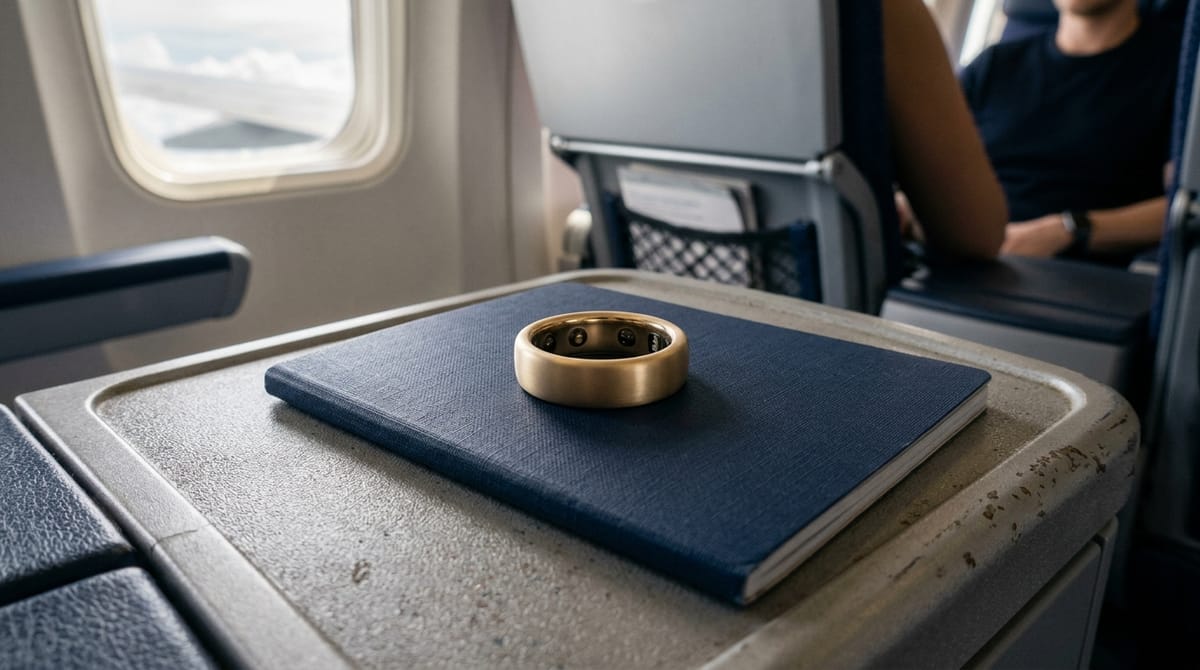
Smart Ring for Travel & Jet Lag
Smart Ring Sizing Guide
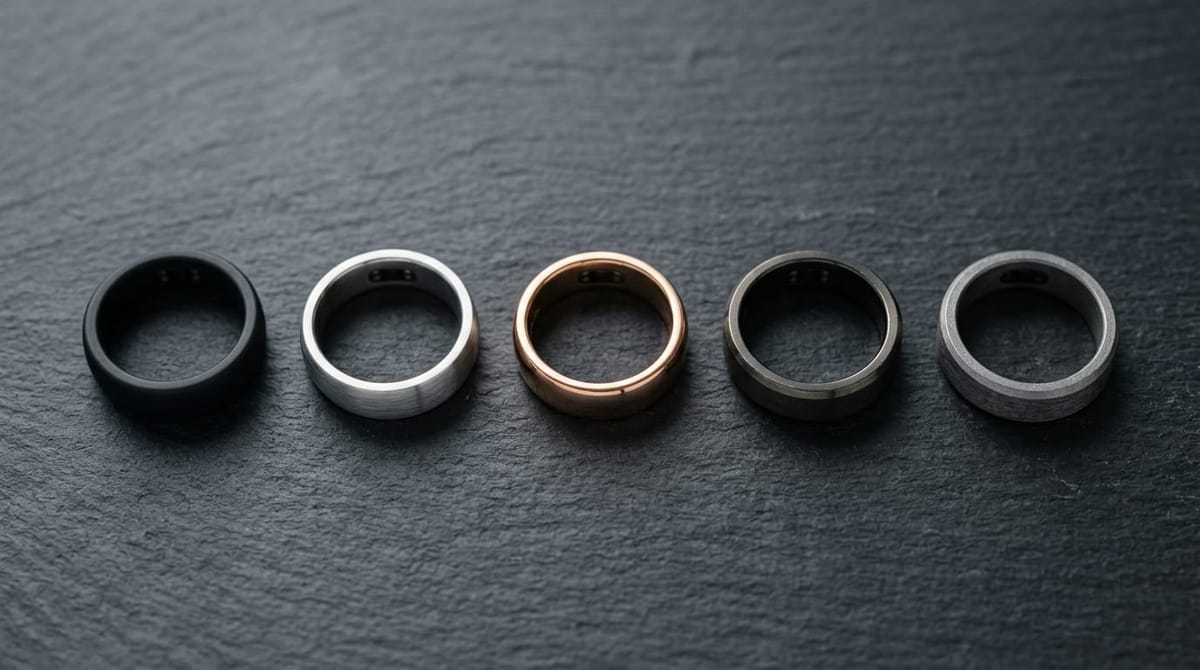
Best Smart Rings 2026