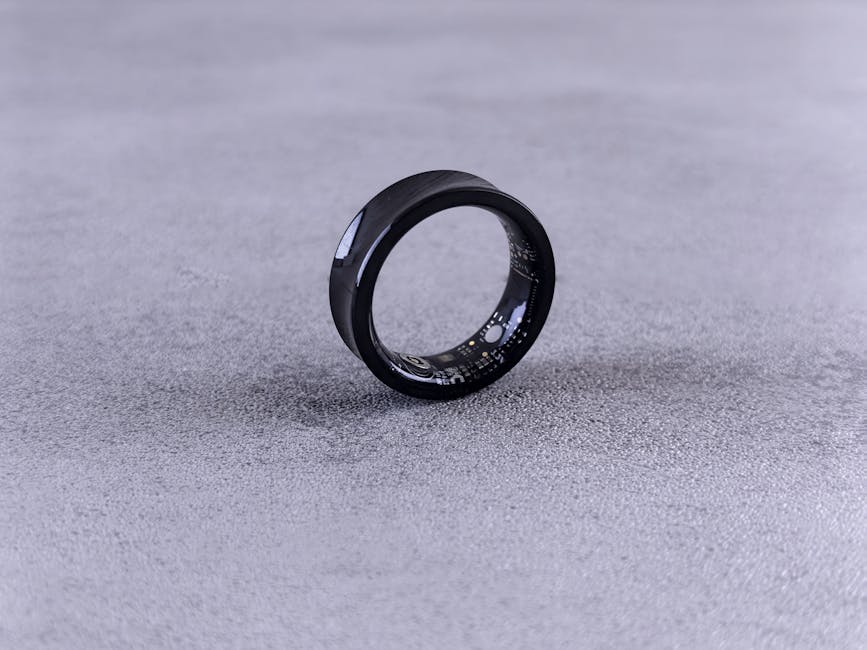
Smart Ring Buying Guide: What Actually Matters in 2026
The 7 factors that decide whether a smart ring is worth £349+ for you — subscription, battery, sizing, sensor accuracy, durability, apps and patent risk.
A smart ring is a £349-to-£500 wellness device that lives on your finger 24 hours a day for two-to-three years. That makes the buying decision a lot more consequential than the marketing implies. This guide walks through the seven factors that actually decide whether a smart ring will earn its place on your hand, with current pricing and product context accurate as of May 2026.
We have deliberately written this as a buying guide rather than a best-of list. Specific picks are covered in our individual reviews — the questions below apply regardless of which brand you end up choosing.
1. The subscription question (the most expensive decision)
Smart rings split cleanly into two camps. Oura — the category leader — locks the bulk of its features behind Oura Membership, a recurring subscription that costs £4.99 per month in the UK or $5.99 per month in the US ($69.99 paid annually). Your first month is included with the ring; from month two onwards, the meter is running for as long as you want detailed sleep analysis, readiness scoring and personalised insights, as confirmed in Oura's own membership documentation. Membership applies to Gen 3 and Gen 4 rings only.
Across a typical three-year ownership window that is around £180 in the UK or $215 in the US on top of the ring itself. For a £349 Oura Ring 4, total cost of ownership is closer to £530. That is not a hidden cost — Oura is upfront about it — but it is one that often surprises buyers who skim the storefront.
The alternative is the no-subscription camp. Ultrahuman (Ring Air and the new Ring Pro), RingConn (Gen 2 and Gen 3), Samsung Galaxy Ring and Amazfit Helio Ring all ship every core feature for life with the hardware purchase. Amazfit's optional Zepp Coach add-on (around £2.99 a month) is the only modest exception, and it is genuinely optional. If you want a ring you will not have to keep paying for, the field is wider than it looks from inside Oura's marketing.
Neither model is automatically better. Oura's subscription funds a development pace its rivals struggle to match — new metrics, new women's-health features, refined algorithms. The trade is a bill that never stops arriving. Sit with that thought before adding the ring to your basket.
2. Battery life — what manufacturers claim versus what you should expect
Smart ring batteries are tiny by necessity (between roughly 15 and 25 milliamp-hours, depending on size), which means manufacturer battery claims and real-world results often diverge.
As of May 2026, the published specifications and reported real-world figures look like this:
Battery life — claimed vs typical real-world
| Specification | Value |
|---|---|
| Oura Ring 4 | 8 days claimed → 5–6 days typical; ~4.8 days with daily workouts. 15–25% degradation after 12 months. |
| Ultrahuman Ring Pro | 15 days (Chill Mode) / 12 days (Turbo Mode) claimed. PRO charging case adds ~45 days combined. |
| RingConn Gen 3 | 11–14 days with vibration alerts off; 10–12 days with vibration on. |
| Samsung Galaxy Ring | 7 days claimed → 5–7 days real (longer on larger sizes 12–13). |
| Amazfit Helio Ring | 4 days claimed → 2–3 days real-world. ~1h 40m to a full charge. |
A few practical implications:
- If you travel without taking the charger, a four-day battery is not enough. Treat anything under five days of real-world life as a daily-charge device in practice.
- Battery degrades. Independent tests on the Oura Ring 4 reported by Wearable XP showed a 15–25% capacity drop after roughly twelve months of use. Plan to charge more often as the ring ages.
- Larger sizes mean larger batteries. The size-12 Galaxy Ring lasts noticeably longer than the size-7 version of the same model because there is physically more cell inside it.
- Vibration alerts (a new feature on RingConn Gen 3) cost roughly two to three days of life when enabled. Decide whether the haptic nudges are worth the trade.
3. Sensor accuracy — what the data actually means
Every consumer smart ring on the market uses the same underlying technology: photoplethysmography, usually shortened to PPG. The name is intimidating; the idea is not.
Inside the inner face of the ring sit two or three small LEDs — typically green and infrared — pointed at your finger. A photodetector next to them measures how much of that light bounces back. With every heartbeat, your blood-vessel volume changes very slightly, and so does the amount of light returned to the sensor. The companion app turns that pulsing waveform into a heart-rate trace, then layers algorithms on top to estimate heart-rate variability (HRV), blood-oxygen saturation (SpO2), and — when combined with the ring's motion sensor — sleep stages.
Peer-reviewed work on wearable PPG (a 2019 review in PMC remains a useful overview) makes two things clear. First, PPG is genuinely good at resting heart rate and overnight HRV — the readings sit close enough to clinical ECG to be useful for trend-tracking. Second, PPG accuracy collapses during vigorous movement: every push-up, every hand-on-handlebar, introduces noise that the algorithms struggle to clean. If you mostly care about workout heart rate, a chest strap is still the right tool. If you care about resting and overnight signals, a ring is well suited.
The same review highlights the most important practical detail: signal quality depends on fit. A loose ring lets ambient light in around the sensor and lets the ring slide on the finger. Both produce noisy data that no amount of algorithmic cleanup can fully recover. Get the size right, or every accuracy claim in this section becomes irrelevant.
For an independent yardstick on which rings track most consistently, the work of Rob ter Horst — The Quantified Scientist is the most-cited reference in the wearables space. Ter Horst is a bioinformatics PhD who runs ring data side-by-side with polysomnography (the gold-standard sleep-lab method) and ECG chest straps for heart-rate accuracy. His methodology and findings consistently put the Oura Ring among the most accurate consumer wearables for sleep staging, while a 2025 head-to-head test reported by Gizmochina showed the [Apple Watch](/blog/smart-ring-vs-smartwatch/) Ultra 2 edging out smart rings on combined heart-rate and sleep sensor accuracy. One caveat worth noting: ter Horst has acknowledged a long-running relationship with Oura, which some viewers consider a conflict of interest. The data he publishes is consistent and reproducible, but it is worth corroborating any single result against other independent reviews.
4. Sizing — the number-one reason rings get sent back
Sizing is the most common cause of smart-ring returns. Estimates from industry sources suggest that using a sizing kit prevents around 80% of avoidable returns, as summarised in Trimflo's sizing guide. Every reputable brand — Oura, Ultrahuman, RingConn, Samsung, Amazfit — sells or includes a free plastic sizing kit. Use it.
The non-obvious part of sizing is that fingers swell and contract significantly throughout the day, with diet, temperature, alcohol, and time of day. A ring that fits perfectly at the kitchen table at 7pm may dig into your finger by midnight and slide off by 4am. The protocol every brand independently recommends is:
- Wear the sizing-kit ring on your index finger as the default. The middle or ring finger also works, but consistency matters more than which finger.
- Wear it for at least 24 hours, including overnight. Pay attention to whether it feels too tight after a salty meal, or too loose when you wake up at 5am.
- Pick the size that feels secure across the whole 24-hour window — slightly snug rather than slightly loose. Almost everyone errs on the loose side; almost everyone returns those rings.
The reason this matters is not just comfort. As noted above, a loose ring produces noisy PPG signal. RingConn's own documentation makes the connection explicit: bad fit equals bad data. The whole point of buying a £349 device is the data, so getting the fit right is not optional.
5. App ecosystem and platform support
The ring is the sensor; the app is everything else. A ring with a poorly-designed companion app is a frustrating product no matter how good the hardware is.
Almost every premium ring sold in 2026 requires iOS 13 or later, or Android 8.0 (Oreo) or later, with advanced features typically needing Android 10+. On iPhone, every major brand — Oura, Ultrahuman, RingConn, Samsung, Amazfit — supports Apple HealthKit and writes sleep, HRV, heart rate and steps back to it. Apple's Bluetooth Low Energy stack does impose check-in rate limits that can make the app feel slightly slower to refresh than the Android equivalent.
The Android picture is more uneven. RingConn and Ultrahuman have generally invested most heavily in Google Fit / Health Connect coverage; both apps follow Material Design conventions. The Samsung Galaxy Ring is the obvious special case — paired with a Samsung phone and Samsung Health, it is one of the best-integrated wearables on Android. On a non-Samsung Android device, the experience is more limited, with several premium features tied to Samsung Health specifically.
- iPhone user, ecosystem-agnostic: any major ring will work well.
- Samsung Galaxy phone user: the Galaxy Ring is the strongest integrated option, with no subscription.
- Other Android user: RingConn or Ultrahuman tend to have the best Google Fit / Health Connect parity.
Before buying, check whether the brand's app is in your country's App Store and Play Store, and whether the features you want (women's-health tracking, AFib screening, sleep-stage detail) are gated by region. Smart-ring feature sets are not always identical between the US, UK and EU launches.
6. Materials, durability and day-to-day wear
Smart rings live on your hand 24 hours a day. Hands do a lot. The outer shell of every premium ring is titanium with a hardness coating — either PVD (physical vapour deposition) or DLC (diamond-like carbon). These coatings are hard, but not invincible. Weightlifting, climbing, carrying heavy bags, and even routine gripping of metal door handles will, over months, leave hairline scratches on the outer surface, as documented in RingConn's maintenance guide.
Two practical observations on durability:
- The inner sensor surface matters more than the outer shell. Damage that obscures the PPG LED windows can interfere with signal quality, and Oura's own product safety guidance warns explicitly against rings that have been struck hard enough to scratch the sensor face.
- The Samsung Galaxy Ring has been flagged in independent reviews — including a Gizmodo report — for scratching more readily than rivals. If you regularly handle anything abrasive, factor that in.
If you lift weights or climb, the practical answer is to take the ring off for those sessions or wear a silicone protector. "Ring rash" — irritant dermatitis under the band — is almost always caused by trapped soap residue rather than the ring itself; rinsing and drying the ring every few days prevents it.
7. The patent litigation (US buyers especially)
The smart-ring category is currently entangled in litigation that affects what you can legally buy in the United States. As of May 2026:
- The US International Trade Commission ruled in Oura's favour on US Patent 11,868,178 (covering a layered internal-component arrangement) in September–October 2025, as reported by Businesswire. Exclusion and cease-and-desist orders block import of infringing Ultrahuman and RingConn devices into the US.
- RingConn settled with Oura and now operates under a licence with royalty payments. The Gen 3 launched on 5 May 2026 with full US availability.
- Ultrahuman appealed the ITC ruling on 22 October 2025 and re-entered the US market with the redesigned Ring Pro from March 2026, claiming the new product works around the disputed patent. The appeal is pending. Ultrahuman has also counter-sued Oura in India over women's-health and metabolic-feature IP; that case was reinstated on 3 November 2025.
- Existing US Ring AIR owners continue to receive warranty support and app access, per Ultrahuman's own statement.
For a UK or EU buyer, none of this matters directly — all four major brands ship freely. For a US buyer, the practical reading is: Oura is unaffected, RingConn is unaffected (post-settlement), and Ultrahuman's Ring Pro is currently shipping but operates under live legal uncertainty. The risk that Ultrahuman could be excluded again is non-zero, although existing-customer support has so far been maintained when previous exclusion orders bit.
What to skip — and what to wait for
A few things deserve less weight than the marketing implies:
- Colour and finish. Premium gold-coloured finishes typically command a £100–£150 premium for an identical sensor stack. The data does not get better; only the photo on Instagram does.
- Headline-grabbing single features. "Blood pressure trend insights" and "sleep apnea detection" are useful trend-tracking, but they are not medical-grade diagnostic. Treat them as wellness signals, not as a reason to skip a GP visit.
- "AI-powered" everything. Most consumer rings now describe their app as AI-powered. The label matters less than the underlying signal quality and the app design.
And a few things to wait for:
- If your strongest motivation is recovery and athletic readiness, the Apple Watch and the chest-strap-plus-Whoop combination remain better-validated for workout heart-rate accuracy than any ring currently on sale.
- If you are weight-fluctuating significantly (recovery from injury, post-partum, weight loss) and your finger size is changing, defer the purchase until things stabilise. Resizing a smart ring usually means a full repurchase.
- If you live in the US and are torn between the Ultrahuman Ring Pro and an alternative, the active appeal makes the Ring Pro the more legally uncertain option. That uncertainty may resolve in either direction.
Frequently asked questions
Are smart rings more accurate than smartwatches?
Which finger should I wear a smart ring on?
Can I shower or swim with a smart ring?
Do I need to charge a smart ring every night?
What is the cheapest smart ring worth buying in 2026?
Next: pick the right ring for your use case
We track current pricing, feature changes and patent status for every major smart ring. Browse our buying-guide companion comparisons to narrow your shortlist.